Race based biases have been a long standing, critical part of Western culture. The ideals that discriminate against African Americans influenced scientific research and vice versa. As touched on by Londa Schiebinger in “Nature’s Body”, in early studies on the relationship between apes and humans, it was believed that the course of evolution went from apes, to non-white races, to the most-evolved white man at the top. This concept was also supported by Charles Darwin, who focuses largely on the ‘savage’ intermediate races between white people and ape. Because our culture emphasizes the superiority of European races, the way scientific research is conducted also reflects these values, which is then used to justify this inequitable treatment of African Americans. If black people are less human, then they can be treated as so. Such racial stereotypes and biases are highly prominent in regards to Johnson’s interactions with white colleagues.
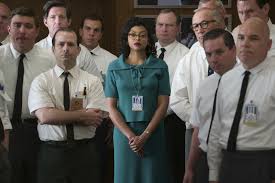
These racially motivated biases and expectations are projected onto Johnson from the moment she arrives to work with the Space Task Group. Notably, in one scene, a female receptionist immediately undermines her because of her race by speaking to her like a child. She is told “Do your work, keep your head down. Go on, get settled” in a rather condescending tone, denoting that she is not welcomed and not believed in. In another scene, Johnson casually rises from her seat to get coffee from the room’s coffee machine, which results in silence and several judgemental glares. Simply because of the color of her skin, nobody wanted to drink coffee from the same pot. The next day, she finds a small coffee pot labeled “colored” that someone had placed on the table for her to use instead. Her race becomes all they see, and she is not given a chance to show her abilities. Johnson’s white coworkers had expectations and presumptions about her character and capabilities before she even opened her mouth due to the color of her skin. Their actions root from the assumption that African American people are subordinates in comparison to the most evolved, superior white race.
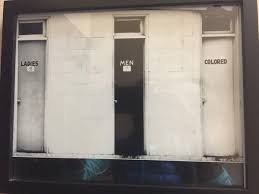
In a later scene, Director Al Harrison scolds Johnson for leaving the office for long periods of time multiple times a day. He questions and judges her character in front of the entire Space Task Group, seemingly assuming that she is acting unreliably. Although in actuality, she was using the ladies room. Because she is African American, she is forced to walk half a mile to the West Campus Area because there are no ‘colored’ restrooms nearby. When Johnson informs Harrison that there are no bathrooms for her in their building he says “What do you mean that there is no bathroom for you here”. This possibility does not even cross Mr. Harrison’s mind, which shows that privileged individuals become so incredibly accustomed to the way things are that they become blind to the injustices taking place around them. This blindness then further perpetuates such inequities through ignorance and inaction.
Western culture has been built on the basis of racial discrimination of African and African American people. Concepts promoting racial inequality have stood as long as this country has, rooting in colonial values. In order to morally justify such treatment of other people, science has been manipulated in favor of white superiority, further strengthening and encouraging these ideas to sustain it within our culture and society. The cycle between culture and science results in the preservation of the racially motivated thinking and actions displayed in this film.
Images:
pathos.com
 Hidden Figures: Race and Gender Roles